

Models & Pricing
Learn about CoffeeRouter billing units, billing types, and how to read the Model Square.
CoffeeRouter features a fully transparent, pay-as-you-go billing mechanism. Real-time pricing, billing types, discounts, and compatible endpoints for all available models are publicly listed on the Model Square.
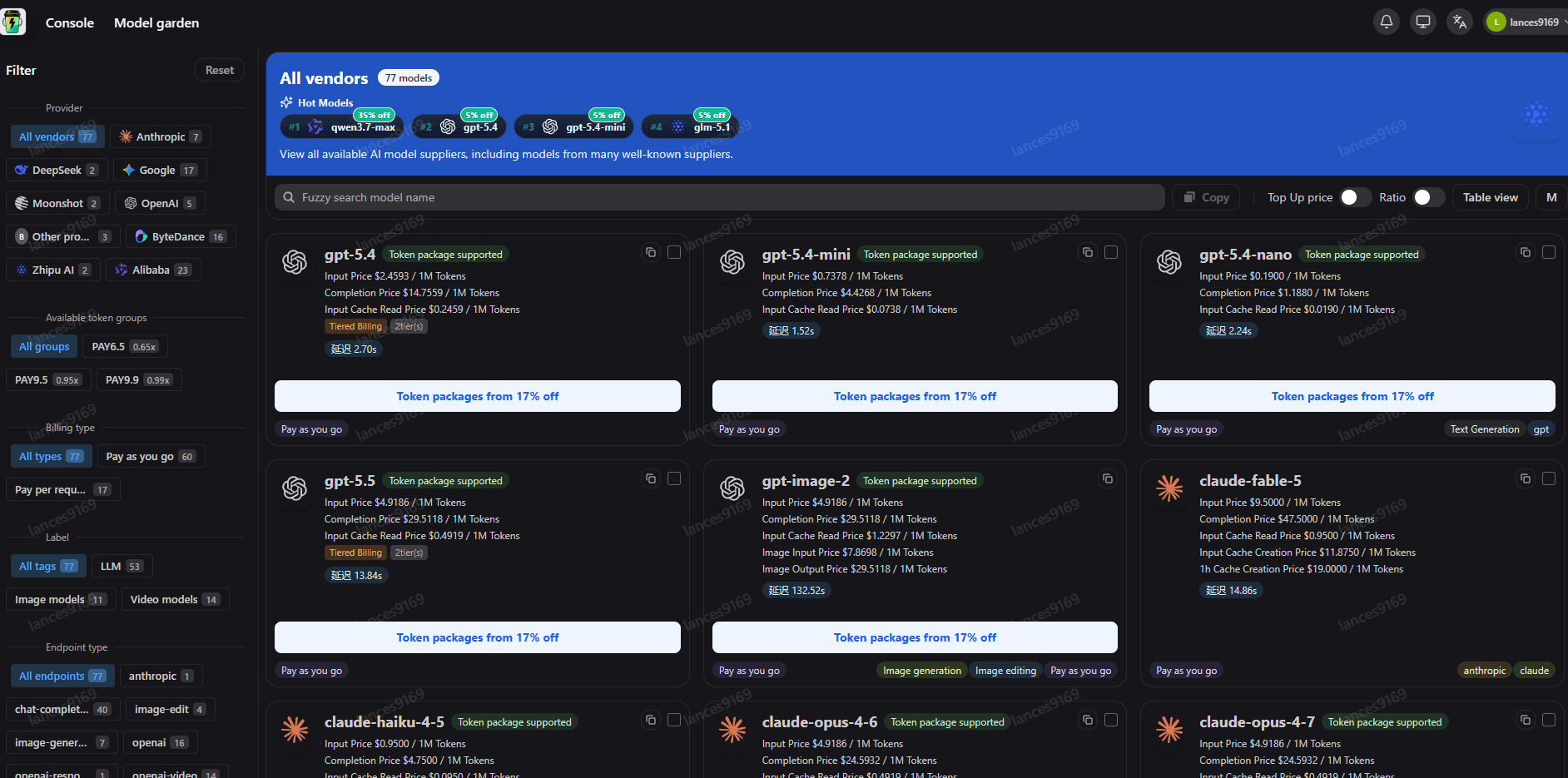
1. Understanding Model Pricing
On the Model Square, you can easily view the exact cost breakdown for every model.
1. Billing Types
Models on the platform are billed using one of two methods:
- Token-based Billing: billed based on the actual number of input and output tokens consumed. Prices are usually shown per 1M Tokens, and you can switch to per-1K pricing when needed.
- Per-request Billing: some multimodal, tool-oriented, or special models use a flat rate per request, regardless of prompt or completion length.
2. Context Caching Rates
To help users reduce costs for long-context tasks such as chatting with large codebases or massive documents, CoffeeRouter provides granular caching rates for compatible models:
- Input: the standard price for uncached prompt tokens.
- Cache: the discounted price for prompt tokens that hit the context cache.
- Write Cache: the price for initially writing large blocks of text into the context cache.
3. Discounts
Real-time discount tags are displayed next to model names and prices. The system automatically calculates and displays the final discounted prices.
4. Filters and Endpoint Compatibility
- Available API Key Groups: use the sidebar filter to switch between different API Key groups such as
default,vip, andinsider. - Compatible Endpoint Types: displays the API protocol formats supported by the model, including
openai,openai-response,anthropic, andgemini.
2. Credits and Conversion Rules
All API calls on CoffeeRouter are converted to system credits for real-time deduction.
Credit Conversion Formula
1 USD = 200 Credits, which means 1 Credit = 0.005 USD.
Token-based Billing Formula
When calling a token-billed model, the actual credits deducted for a single call are calculated as follows:
Credits deducted = [(input tokens × input price) + (output tokens × output price) + (cached tokens × cache price)] × 200
Note: credits are automatically deducted from your account balance after the API call succeeds, based on the actual token usage returned by the upstream provider.
3. Cost Optimization Best Practices
- Choose the Right Model: for code completion, formatting, or lightweight chats, use cost-effective models such as
deepseek-chatorgemini-2.5-flash. For complex reasoning and coding tasks, use a stronger Claude model. - Leverage Context Caching: in development tools such as Claude Code or Cline, keep the top of your prompts stable so cache hits happen more often.
- Set Key-level Quota Limits: assign maximum quota limits to development and testing keys to prevent unexpected balance depletion.